

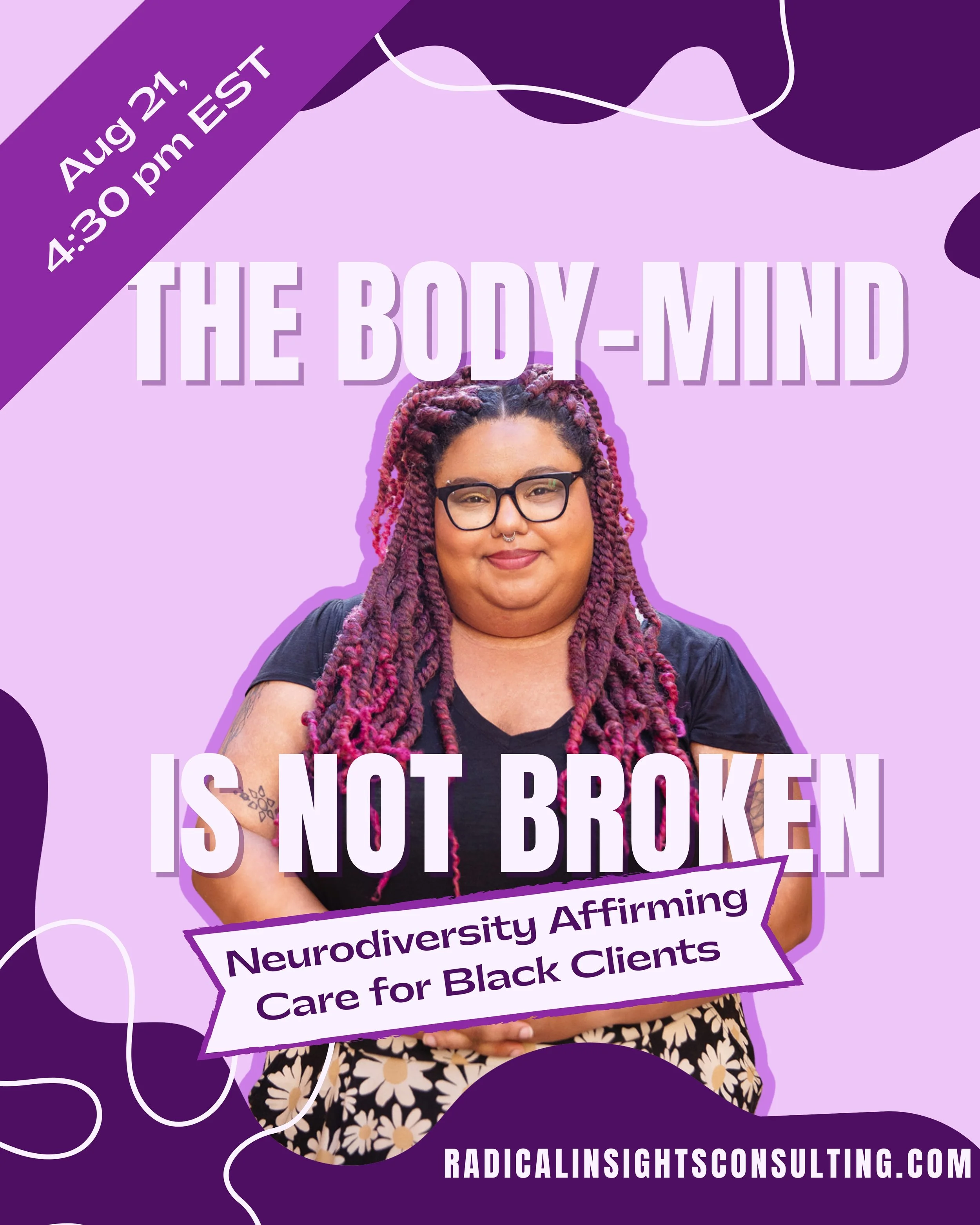
An introduction to neurodiversity affirming care for Black clients.
Black clients are too often pathologized. Their neurodivergence is seen as deficit, their responses as "resistance," their bodies as "too much." The mental health system (built on white supremacy and ableism) has rarely offered Black people a framework that actually affirms their full humanity.
We'll explore what it means to provide neurodiversity affirming care through a liberatory lens, one that refuses the deficit model, names systemic harm, and centers the lived experience of Black clients. This isn't about adding a "culturally competent" checklist to your practice. It's about fundamentally shifting how you see and serve Black clients who are trying to survive neuronormativity.
We’ll cover:
A full, intersectional understanding of the neurodiversity paradigm
How anti-Blackness and ableism intersect in clinical settings
How and why Black clients get missed and left out of neurodivergent conversations, spaces, and practices
Practical supports for Black neurodivergent clients
There are 3 options for attending this webinar and all options will receive the exact same services, resources, and information.