
“They crossed my boundary, I told them not to text me and they did, they’re so fucking toxic”.
Ok, wait, before you click away. I know this is a popular, maybe even oversaturated topic this time of year. Everybody and their mama is talking about boundaries right now, but here’s the thing, I still see so much confusion about what a boundary even is. In the example above, someone is clearly misunderstanding what a boundary even is.
It’s ok, there’s no judgement over here about that misunderstanding. We don’t actually learn what boundaries are and how to effectively set them unless we have parents who happen to both know and teach us! Systems of oppression don’t WANT us to know how to set effective boundaries. They want us to feel the type of isolation and burdensomeness that comes from un-boundaried relationships.

Let’s back up, start at the start as it were.
I’ve had to figure out boundaries the hard way. I grew up in a very un-boundaried house. It was unstable, unkind, and unpredictable. The expectations of the adults in my life were a mystery to me (and often to each other and even themselves). My own needs were viewed as “too much”, overwhelming, dramatic. Emotional exploration and processing were not the name of the game.
This became a big problem as I got older and picked friends that mirrored my home life. I was never comfortable directly expressing or acting on my needs until my system just couldn’t take it anymore. I found friends who didn’t care for themselves well and took it out on me.
It took me years of feeling unmoored, questioning myself and my ability to be loved, before I would figure out that the key to the healthy, stable relationships I craved was in fact boundaries.
Something that made it harder was that as I got older, everyone kept claiming they were setting healthy boundaries and doing anything but. They would dictate my actions, claim it was their boundary, and then punish me for not getting in line, again friendships imitating home life.
As I progressed through my own therapy and through becoming a therapist I found myself noticing more and more how quickly people were to label others as “toxic”, “monstrous”, and “narcissistic” especially when it came to a perceived crossing of boundaries. It took me so long to put my finger on the problem!
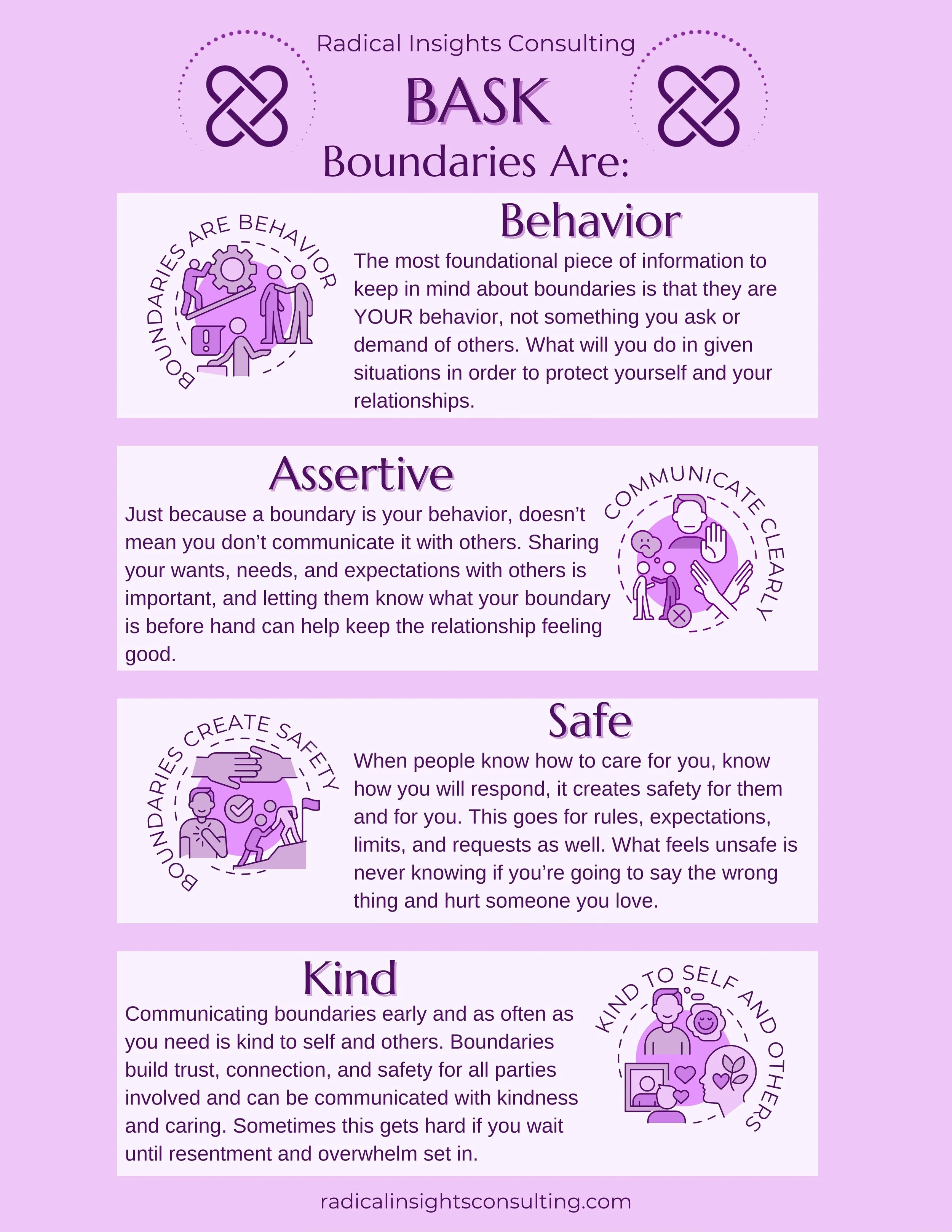
Boundaries aren’t verbal, they’re not the expressed rule, expectation, limit, request.
The boundary is the behavior.
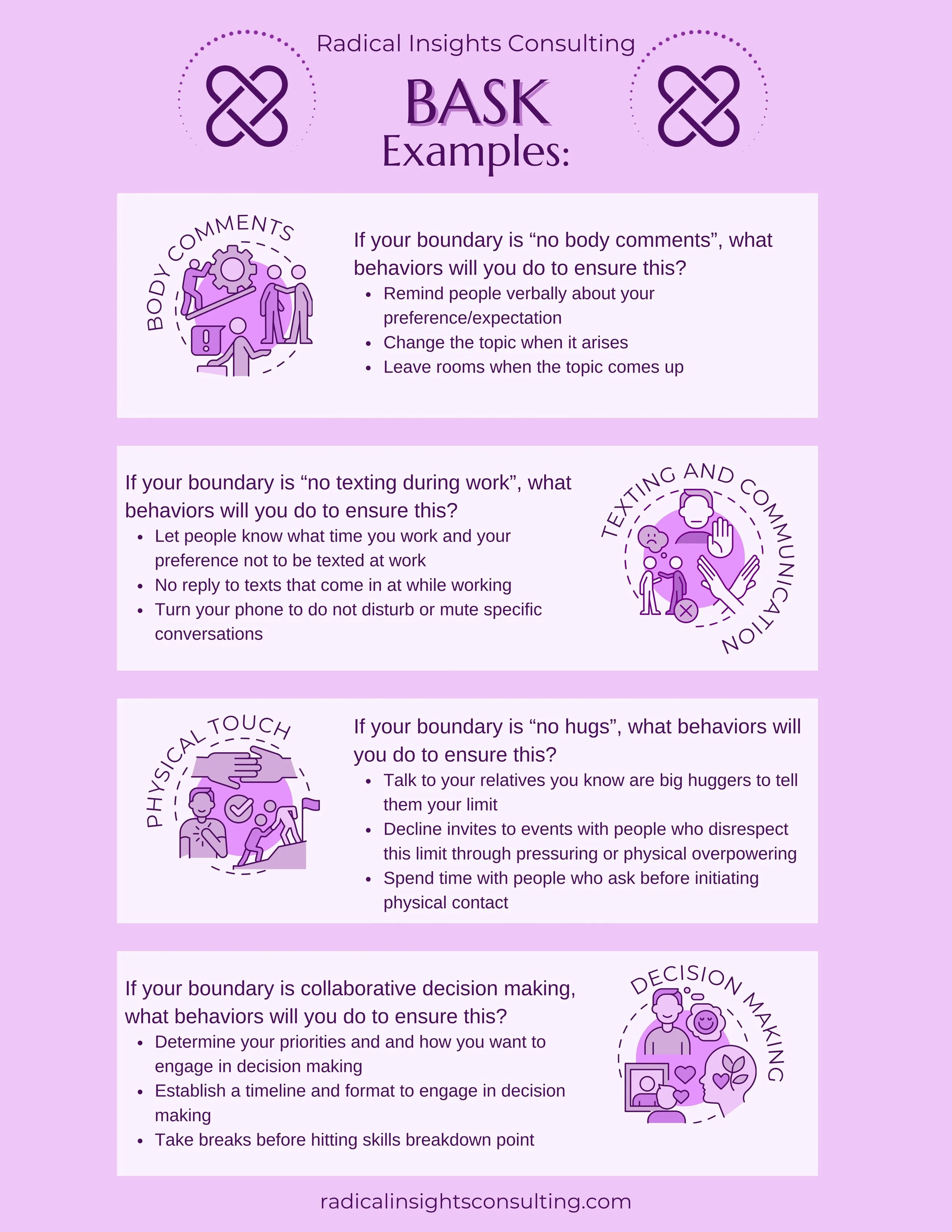
I found myself over and over learning the lesson that I needed to set boundaries. Real, physical boundaries. Leave rooms that weren’t for me, not answer calls that I wasn’t up for, end relationships that hurt me.
Now, this is where we also have to be careful not to let our boundaries isolate us, they aren’t there to keep us perfectly, pristinely “safe”. They are there to make us communally, connectively safe. When we are well boundaried we can keep our inner child parts safe while building the kind of village we will need to raise them.
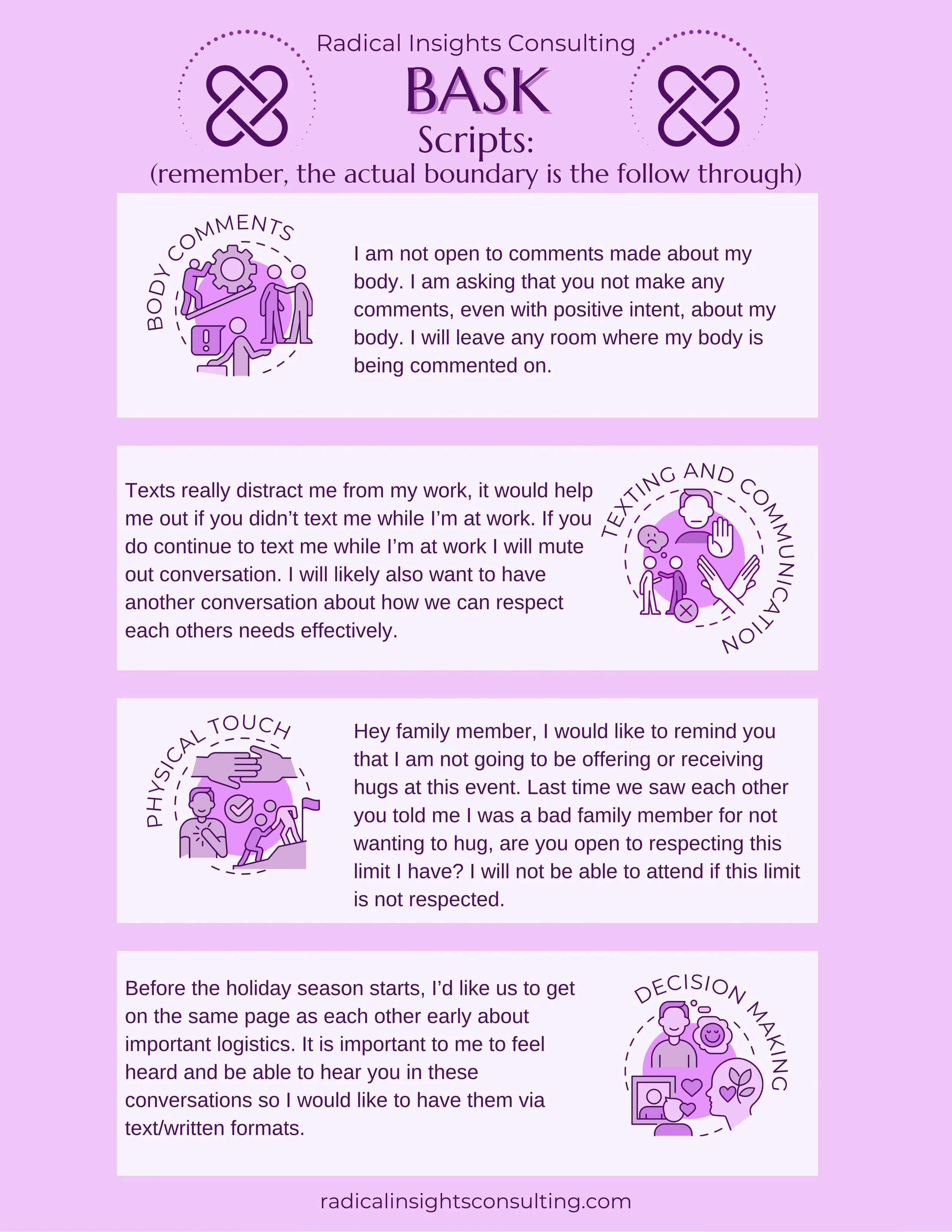
We can say “I’m feeling overwhelmed by this, I’m going to walk away and ground” and then do it with people who will respect that need and not create the need for a further more significant boundary (such as going home all together). We can not answer a text or call without fear of the big summer blow out it will inevitably lead to. We can hear others let us know their needs, balance it with our own, and get creative in how they can be met collaboratively.
“Hey Sabrina, that sounds like a verbal expression of a limit.” Yeah, it is, followed by…? A Boundary! (see, go back up, it’s right there “and then do it”)
Directly communicated requests, rules, expectations, and more are important for building healthy friendships too! In fact, to me, the hope is to build relationships that utilize those communication skills and support boundary use simultaneously. One is not better or more valuable or important than the other. One doesn’t mean a healthier relationship. They’re just different, they have different uses. And if you keep finding yourself frustrated and warn out from people “disrespecting your boundaries”, it may be worth realigning to what you’re doing.
If your boundary is “stop calling me at work”, that’s not a boundary, thats a rule. The boundary would be not answering the phone while you’re at work.
Because I know it can be hard to remember, and this time of year does genuinely call for effective boundaries, I whipped up a quick mnemonic and some examples to help you BASK in the glow of healthy relationships. Download Below!